BetVision – Immersive Watch & Bet Experience

Client: Genius Sports

ROLE: Product Designer, UX Strategy

Year: 2025

The Problem

The traditional live betting experience was fragmented. Users were forced to choose between watching the game on a stream or looking at a data-heavy betting interface. This “second screen” friction caused a disconnect: every time a user looked away to place a bet, they missed the action, and every time they focused on the stream, the operator lost potential transaction volume.

The Goal

To merge the viewing and betting experiences into a single, cohesive interface. The goal was to design an immersive “Watch & Bet” product that allows users to consume live sports, analyze real-time statistics, and place bets without ever leaving the video player, ultimately increasing engagement and time-on-screen.

Initial Questions

  • How might we merge high-density betting data with a video-first experience without cluttering the interface?
  • Can we eliminate the “second screen” friction to capture high-intent moments during live play?
  • What is the optimal balance between a passive “lean-back” viewing experience and an active “lean-forward” betting interaction?

The Process

This project required a rigorous end-to-end design process, balancing the technical constraints of low-latency video with the regulatory precision required for betting interfaces.

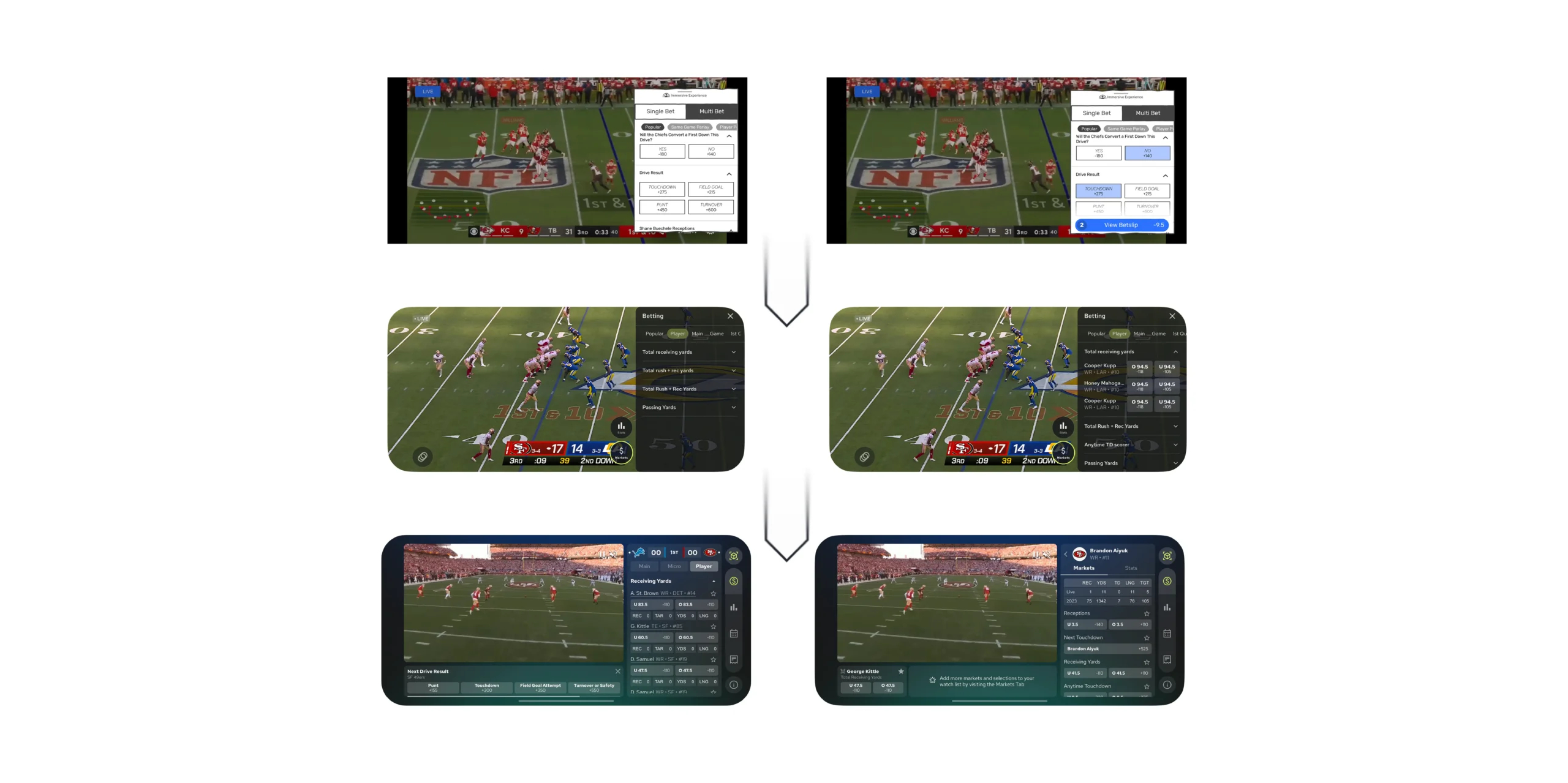
  • Discovery & Definition: We started by mapping the “punter’s journey” during live events. User testing revealed that standard betting overlays were too intrusive and obscured the game.

  • Design Iterations: I led multiple rounds of exploration to find the “sweet spot” between visibility and unobtrusiveness. We iterated from heavy modal-based interactions to a fluid, drawer-based system that kept the video visible 100% of the time.

  • Prototyping & Validation: We built high-fidelity interactive prototypes to test the “time-to-bet” metric. User testing results showed a significant reduction in friction, validating that the integrated experience felt faster and more intuitive than the traditional app-switching behavior.

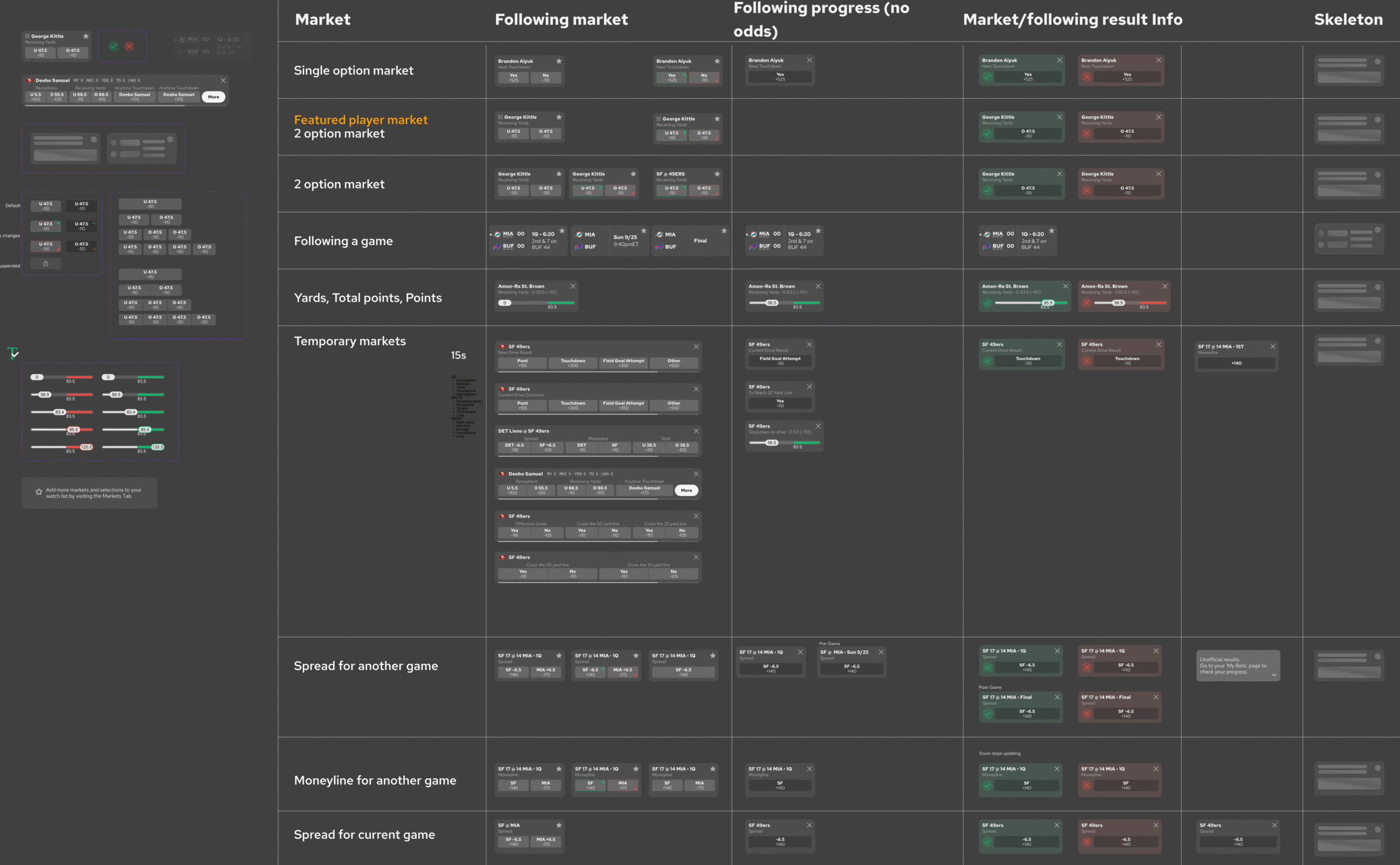
  • Systematization: To ensure scalability across different sports (NFL, Premier League, etc.), I documented a comprehensive component library. This included video-safe accessible colors, contrast-checked typography for overlay use, and modular betting cards that could adapt to different screen sizes.

The Solution

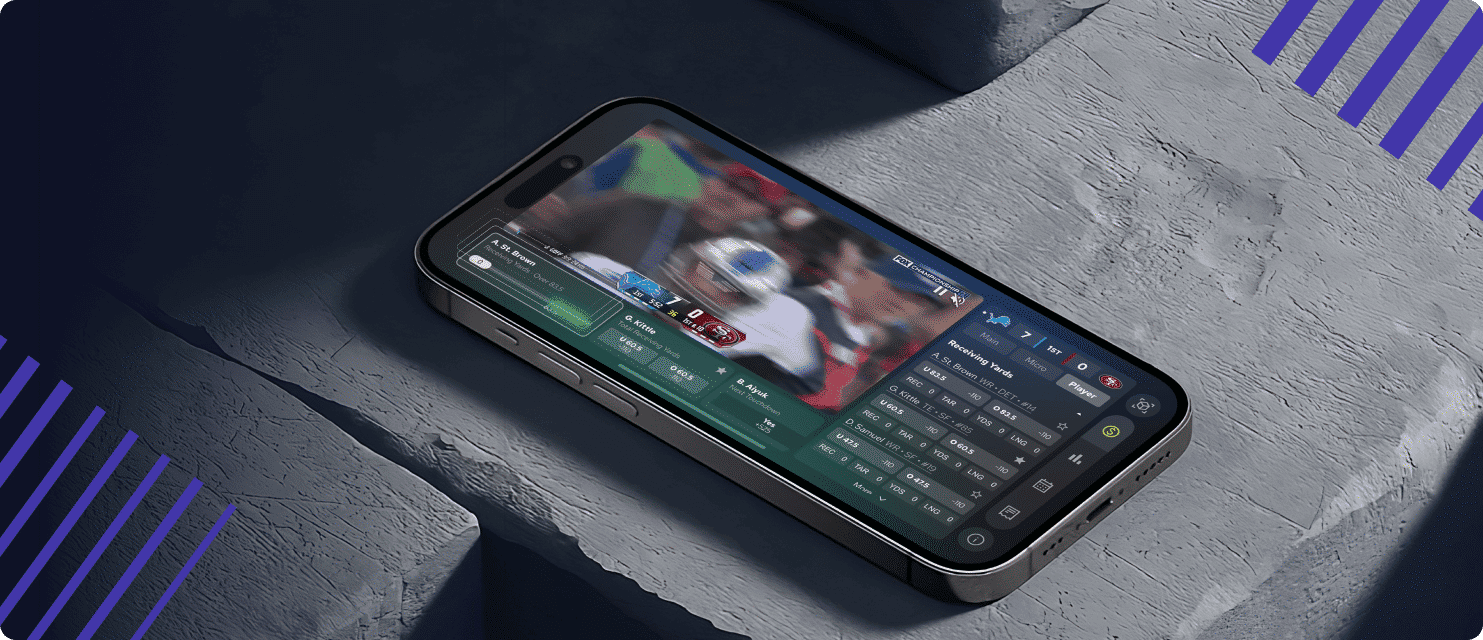
The final BetVision product is an immersive video player that acts as a fully functional sportsbook:

  • Video-First Interface: The UI adapts to the video content, using gradients and transparency to ensure the game remains the hero.

  • Integrated Betting & Stats: Users can toggle live stats and betting markets that overlay the video contextually, appearing only when relevant or triggered.

  • Unified Bet Slip: A simplified betting flow that allows users to build and place a bet without navigating away from the stream.

  • Interactive Overlays: Touch-friendly zones that allow users to interact with game elements directly on the video layer.

The Outcome

BetVision successfully transformed the passive viewing experience into an active, transactional one.

  • Validated Engagement: Post-launch analytics and user feedback confirmed that users stayed in the stream longer when interactive features were enabled.

  • Design System Maturity: The component library created for BetVision established a new standard for “dark mode” and video-overlay interfaces within the company, streamlining future development for other streaming products.

  • End-to-End Integrity: By documenting the entire process—from initial sketches to the final pixel-perfect library—we ensured a smooth handoff to engineering and a consistent product vision across platforms